


Will we ever get to a stage where AIs do absolutely everything? Will we enter an age of abundance? Who knows. I don’t. But here’s why After the Ladder still matters. For the next long while, decades probably, humans and AI will work alongside each other. Where humans remain valuable in that arrangement isn’t a mystery. I’d argue it’s predictable, teachable and certifiable. If the traditional career ladder is breaking down, what will replace it? Which skills count now? That’s what After the Ladder is about.
I’m optimistic about the future of work
Like everyone else and their dog, I’ve got opinions about the future of work. Mine come from thirty years of building EdTech businesses through every technology wave since the PC, and from spending a lot of time with the young people the future of work is supposed to be about. So I’ve got that on the dog. Whether it makes me right, you can judge.
The AI-and-work debate risks settling into a dour consensus in which serious people compete to be the most worried. I’ve been to the meetings. Nobody is having a good time, including the people who are right. I’m going to take the other side: not because the fear is unfounded, but because it’s half the picture, and I think the smaller half. The opportunities are bigger.
Predicting the future is a dangerous game. Some things about the future are predictable, and some are not. And it’s helpful to know which is which. I feel there is easily enough that’s predictable about the future to build effective strategies … either as an individual or for the system as a whole.
The opportunity
The tools now arriving let one person do what used to take a team. They make expertise cheap and put capabilities in the hands of a nineteen-year-old that were reserved, ten years ago, for people with a department behind them. If we are heading towards anything like the abundance that Bill Gates and others describe, the scarce and valuable thing won’t be knowing how to do the work. It will be being the person who can be trusted to deliver an outcome: someone who can hold real responsibility, direct capable tools and colleagues, and answer for the result. That’s a bigger role than most entry-level jobs offered before, a more interesting one, and there will be more of it to go round, not less.
The problem is that how we educate people doesn’t prepare them for it.
One small group
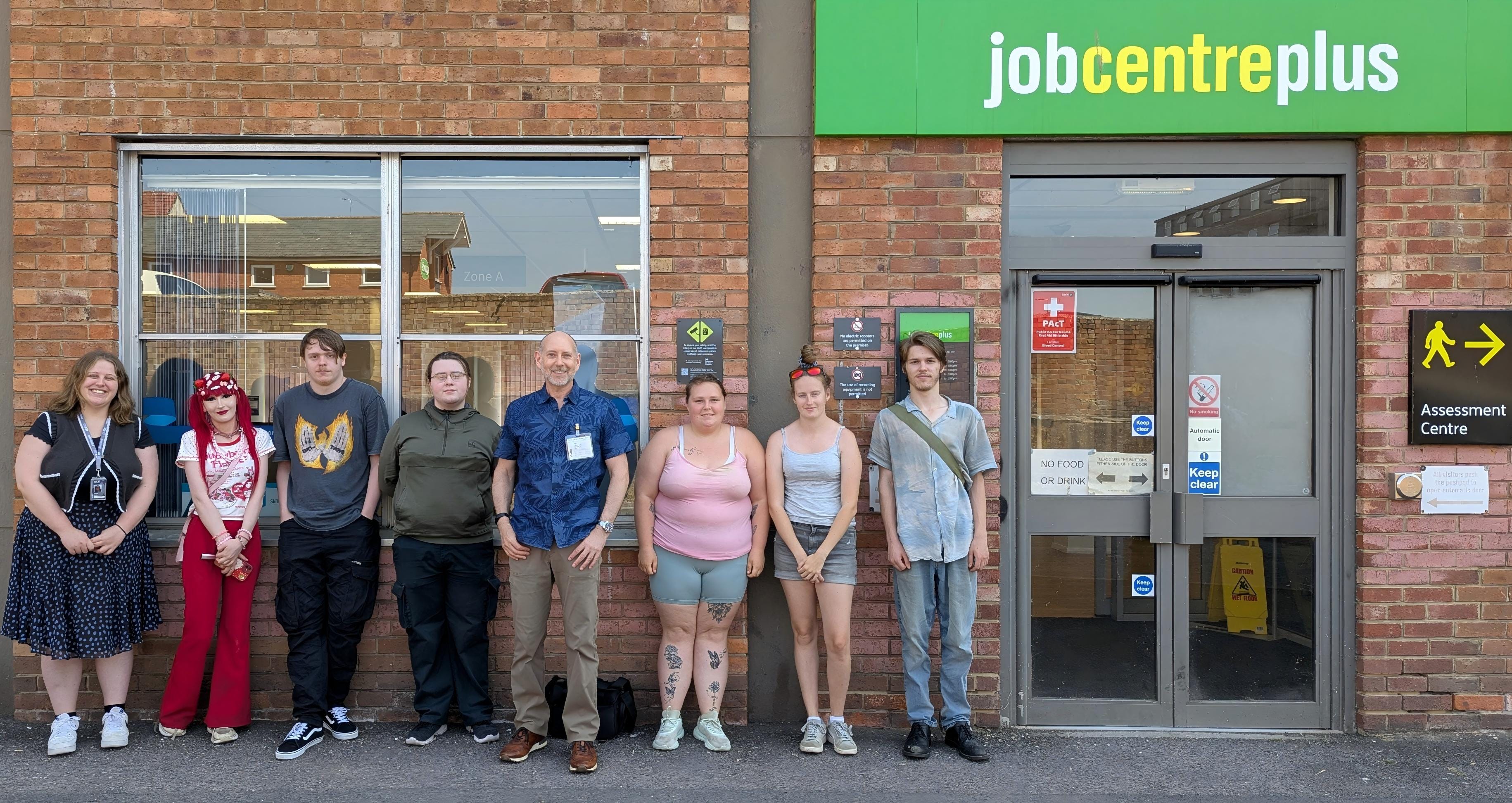
Here’s what it looks like when you ask a different question. This summer I was working with a small group of young adults referred by the Jobcentre in Taunton, Somerset: people who’d left education early or been told they couldn’t progress. The first thing we did was ask what they were good at, with a checklist to help. Within the first session, people who’d arrived believing they had little to offer were saying ‘actually, I can do that’ and naming roles in finance, in care and in management that they wanted to pursue. They kept turning up every week, which for that group is not nothing, and within a few weeks most had a direction they hadn’t had before. It’s one small group and I won’t over-claim from it. But it is not what the dour consensus predicts.
I’ve seen this before, kind of
I’ve spent decades building technology businesses through the eras of the PC, the internet, cloud and software-as-a-service. Each wave did the same two things at once: it took over some of the work people used to be paid for, and it made each hour of the remaining work worth more. Adam Smith’s pin factory, again and again. AI is bigger and faster than previous waves. It is unique in certain ways. But so were all the others. And what each wave left behind was the same: the parts of the job that can’t be automated, which mostly means being the person accountable for the result. I’ve watched that responsibility move up the organisation with every wave. This time it moves further and faster. That’s the whole problem, and the whole opportunity.
For what it’s worth: SAM Learning, which I founded in 2000, ran in hundreds of UK secondary schools; Penda Learning did something similar in the US; about five million students have used EdTech software my companies have built. In 2014 my wife Maxine and I funded research at Alliance Manchester Business School into the gap between what education produces and what employers value. In 2022–23 I led a consultation on innovation in education for the Foundation for Education Development, and a couple of dozen serious people (a former Permanent Secretary, awarding-body directors, academy-chain leaders, a Brookings fellow, some determined sceptics) read a draft and gave me feedback. That’s the method here too, so please do share your thoughts on anything you find here.
What you’ll get
Once a month, a long post of my own on the skills that count now, and where people still count alongside AI. Most weeks, something shorter, usually a response to what someone else has said. Subscribers see frameworks and position papers in draft, before anyone else, and get to tell me where they're wrong. Everything here falls under one of eight themes, listed below and in the Themes menu at the top of the page. Taken in order, they're the argument.
Three of them are about the commercial world. If you work in education, you may not much like that world. But you know that many young people are going into it, and the cost of arriving unprepared falls hardest on the ones whose families couldn’t tell them how it works. Preparing young people to thrive at work is part of what education is for.
The argument, in brief
The Creaky Ladder
The career ladder is not what it was. It’s losing its bottom rungs. Entry-level jobs are thinning out and the data says so from several directions. AI is speeding this up. I’m not going to pretend that’s fine. But it does mean the ladder is no longer as fixed as it was. And there are greater opportunities to skip rungs. Some entry requirements are still needed: nobody wants a surgeon who skipped anatomy. But some are just in the way. Telling the two apart, and helping people reach the highest levels they can in an area they’re good at, is the biggest opportunity the education and skills sectors have had in decades.
Accountability
Responsibility for a task can be handed to software. Being answerable for the result can’t. A driverless taxi will still, eventually, hurt someone, and somebody will answer for it: the operator, the insurer, the manufacturer. Never the software. Being the person who carries the outcome is where the value is going, and it runs all the way down the organisation, from the chief executive to the entry-level job that owns whether the mailing went out on time. It can be taught and it can be certified. It’s the most hopeful claim on the site and the one I expect to be argued with most.
Every teacher already knows the difference between the student who hands the work in and the one with a story. Higher up, it’s the difference between a department head taking responsibility for his team’s results versus one who makes excuses; or a safeguarding lead taking responsibility across the institution.
The Customer
The qualifications system certifies knowledge, skills and behaviours. Employers hire on the strength of it. But the money that pays the wages comes from somewhere else: a customer, who is paying for a result, a product or service delivered at a price.
As AI arrives, jobs will change quickly. The customer won’t. If you’re publicly funded you have a customer too (DfE, DWP, the combined authority) and they behave like one: a fifth of an apprenticeship’s funding arrives only when the apprentice completes. What a person’s work is worth now depends less on their knowledge and skills, and more on the results they can deliver to someone else.
Portable Skills
There are eight job functions most organisations need: sales, marketing, customer support, finance, HR and training, IT, project management and team leadership. Those are the skills that get people hired, and they travel with them when their company or industry falters. Employers value them, even if they can’t always get their head around “soft skills”. Most people are a good fit for at least one of the eight, but almost nobody is told which one.
Personal Development
Everyone agrees education should develop the whole person. Where human work stays valuable, that narrows to something specific: how much responsibility a person can carry. Carrying responsibility takes real development, and it goes hand in hand with higher earnings and higher standing. It’s what employers look for when they decide who rises. One measure is how many people’s interests you can hold in view at once: your own career, then a team, then an organisation and its customers. Educators already know this. They can tell a Level 1 learner from a Level 3 learner at fifty paces, and they can see it in their colleagues. My contention is that it can be taught and certified.
Multipliers
Two plumbers, identical skill. One works alone by the hour; the other has two apprentices, a booking system and his name on the van. That’s the whole gap, and it isn’t talent. It’s multipliers: anything that lets one person’s work count many times over. If the other person has them and you don’t, your talent won’t save you. Multipliers are teachable, but rarely taught.
The Transition Economy
The period in which humans and AI work alongside each other, and there’s still a place for people in work. We’re in it, near the beginning, and it’s moving fast. The immediate problem is that AI is taking over the doing of skilled work faster than the world can work out who now answers for it. Where it ends, I don’t know; there’s a point past which I decline to speculate.
But bear in mind, the education and skills sector has a part to play in the debate about how AI should be regulated. The skills frameworks we adopt to navigate the Transition Economy will to some extent define the areas where human work remains valuable. And of course, if we can define it, we can teach it and certify it.
This is an area where some of the longer pieces in After the Ladder will live, including the draft paper this autumn, which I’ll send to subscribers and people who know more than I do. Please take part via comments on this Substack, and make your voice heard.
In Practice
Everything above can be taught, measured and certified, and I’d rather show it than say it. I’ll share lessons from the frameworks and qualifications I’ve built in my day job; the shareable parts sit under Frameworks in the menu. Reports from delivery in colleges, schools and Jobcentre referral groups, on what happens when a programme meets real people. Sometimes it goes to plan. The interesting weeks are the other ones.
The obvious question
You’ll have noticed I’m cheerful about this. That’s partly experience, and partly because I’ve been working on it for a while and can see the opportunity. It’s also because I’ve got three children, two of them at university, so none of this is abstract in my house. I’d rather hand them a future worth being hopeful about than a gloomy forecast about the job apocalypse.
I should also put on the table that I’m building a company in this space, National Talent Academy, which I’ve invested in and am proud of. Bear that in mind when reading anything I say, and be sceptical if you want to. But the question remains: new approaches are needed. What would you do?